There's a particular pattern to how Dubai residents engage with the rest of the UAE. They do the desert safari once, usually for visitors. They get to Fujairah eventually. They talk about Hatta for longer than it takes to actually go there. And Al Ain, they keep meaning to do. It's on the list. It's always been on the list. Someone mentions it and the same four people in the group chat say they've been meaning to go, and then the weekend passes and nobody went.
This is worth pushing past.
Al Ain is 90 minutes from Dubai on a straightforward highway, named the Arab Capital of Tourism for 2026, and contains more of the UAE's actual history than anywhere else in the country. Five UNESCO World Heritage sites within the city limits. An oasis of 147,000 date palms that has been continuously inhabited for four thousand years. A camel market that operates the way it always has, with no tourist infrastructure wrapped around it. It is, with some consistency, the most genuinely surprising place UAE residents discover when they finally go.
Getting There
Take the E66 from Dubai, the Dubai-Al Ain Road - straight through to the city. The drive is around 150 kilometres and takes about an hour and thirty to an hour and forty-five under normal conditions. The road is well-maintained and straightforward. No tolls once you're past Dubai.
Al Ain sits on the border with Oman and is administered by Abu Dhabi emirate, not Dubai, which surprises people who've never looked at a map of the UAE. You don't need any additional permit or visa to cross into it. Just drive.
Guided tours from Dubai run AED 150 to 200 per person for shared transport, up to AED 900 to 1,300 for a private vehicle. They cover the main stops and handle navigation, which matters in Al Ain more than in some cities - the sites are spread across a wide area and not all of them are obvious to find without local knowledge. Driving yourself is fine if you're comfortable navigating by GPS.
The Oasis
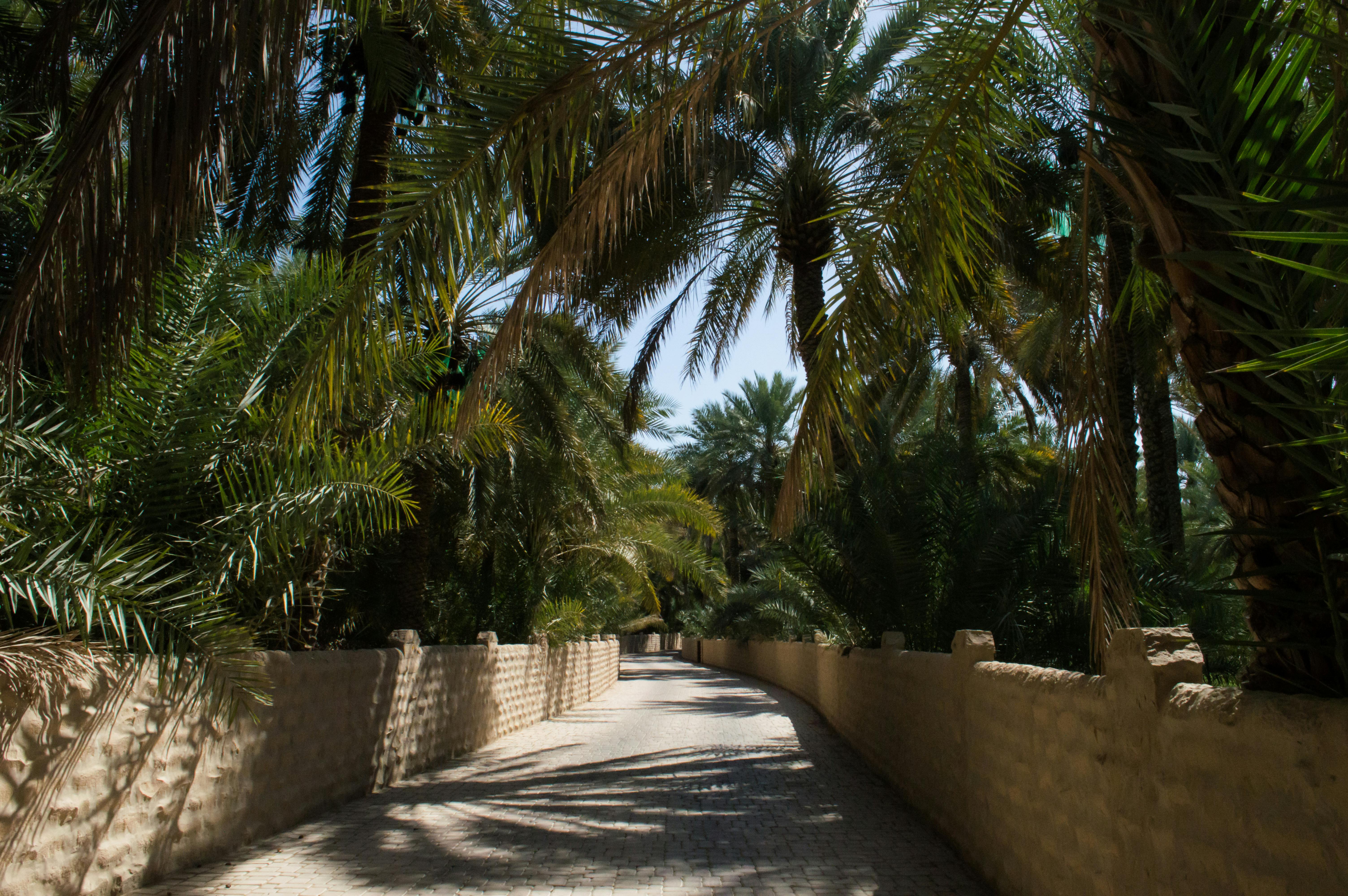
Start here. The Al Ain Oasis sits in the middle of the city and covers 1,200 hectares, a number that doesn't mean much until you're walking through it and realise you can't see the edges from where you're standing. More than 147,000 date palms, arranged around a falaj irrigation system that has been moving water through these channels for millennia. The same engineering that kept people alive in this part of the desert thousands of years ago is still functioning.
Walking through it in the late morning, with the temperature dropping noticeably under the palm canopy, is one of the better free experiences available in the UAE. There are signposted paths, an eco-centre at the entrance, and a dedicated app for those who want the full context on what they're looking at. It takes an hour and a half to cover it properly, longer if you slow down and let the scale of it register. Entry is free. The oasis is open daily.
The Sheikh Zayed Palace Museum
Adjacent to the oasis, this was the home of Sheikh Zayed bin Sultan Al Nahyan - the founding president of the UAE — and his family until 1966. It was converted into a museum in 2001 and has been kept largely as it was: courtyard architecture, Bedouin-influenced interiors, the rooms where the decisions that shaped the modern country were made. A Land Rover identical to the kind Sheikh Zayed used sits in the grounds.
It is not a polished, high-tech museum experience. There are no dramatic installations or interactive exhibits. What it is, is a quiet and direct encounter with the origins of the UAE, in the actual buildings where those origins played out. That's a different kind of thing, and for most visitors a more affecting one. Entry is free. Open Saturday to Thursday 8:30am to 7:30pm, Friday from 3:30pm.
Al Jahili Fort
A short drive from the oasis. Built in the 1890s to protect the date palm farmers of the Buraimi oasis from tribal conflict and external threat, Al Jahili is one of the largest forts in the UAE and one of the best preserved. The cylindrical tower rising from the corner of the fortified walls is the structure most associated with Al Ain when you see it photographed.
Inside, there are permanent exhibitions on the history of the city and a dedicated display on the British explorer Wilfred Thesiger, who used Al Ain as a base during his crossings of the Empty Quarter in the late 1940s. The fort also hosts rotating cultural exhibitions through the year.
Entry is free. Open daily 9am to 7pm.
The Camel Market
The Al Ain Camel Market is one of the few places in the UAE where something genuinely traditional is still happening at full scale, with no museum wrapper around it. Traders bring camels in from across the region. Prices are negotiated. The animals are assessed. Transactions are made. This has been the function of this market for longer than the UAE has existed as a country.
It is not a performance. There are no signs directing you to good photo spots, no guides explaining what you're looking at for a fee. You walk in, you watch, and you try not to get in the way of people who are there to work. Go early in the morning, activity peaks before the heat of the day, and by mid-morning many of the serious traders have wrapped up and left.
The market is free to enter and sits on the southern edge of the city near the old part of Al Ain.
Jebel Hafeet
Jebel Hafeet rises 1,240 metres above the flat desert on Al Ain's southern edge and is the second highest peak in the UAE. A paved road runs to the summit, 12 kilometres of clean switchbacks that most people drive rather than attempt on foot. The views from the top extend over Al Ain on one side and into Oman on the other on clear days.
At the base of the mountain, the Green Mubazzarah hot springs are a natural thermal pool area that families use for picnics and swimming. The springs are free to access. In winter they're genuinely pleasant. In summer the ambient temperature and the warm water combine in a way that most people find more challenging than relaxing, so time your visit accordingly.
The mountain road is open at all hours. The drive to the summit and back takes about an hour including time at the top.
What to Actually Skip
Al Ain has an extensive list of attractions on the tourist literature - the zoo, the water park, the shopping malls, Hili Archaeological Park, various smaller museums. Most of these work well if you're staying overnight or have two days. On a single day trip from Dubai, trying to include all of them means doing none of them properly.
The core sequence for a day trip is the oasis, the Palace Museum, Al Jahili Fort, the camel market, and Jebel Hafeet. That fills a full day without rushing. The National Museum is worth adding if you have a genuine interest in the archaeology of the region, it's the UAE's oldest museum and the collection is serious. Hili Archaeological Park, home to Bronze Age tombs dating back to 3000 BC, is genuinely impressive but works better as a second visit once you've seen the main sites.
Al Ain is more conservative than Dubai and Abu Dhabi city. Shoulders and knees need to be covered to enter the forts and the Palace Museum, and modest dress is the right approach to the city generally. This is not an ambiguous rule the Palace Museum in particular will turn people away at the gate if the dress code isn't met.
Leave Dubai by 7am. Arrive in Al Ain between 8:30 and 9am and go to the camel market first, while the morning activity is still at its peak. From there to the oasis for a walk through before the heat builds. The Palace Museum is adjacent and can follow directly. Al Jahili Fort after lunch, there are decent local restaurants near the fort area serving grilled meats and traditional food in the AED 40 to 60 range per person. Jebel Hafeet for the late afternoon when the light is better and the temperature on the mountain is at its most manageable. Leave by 5pm to be back in Dubai before 7.
What It Costs
Fuel for the round trip from Dubai: AED 60 to 70. Oasis entry: free. Palace Museum: free. Al Jahili Fort: free. Camel market: free. Jebel Hafeet road and Green Mubazzarah hot springs: free. Lunch: AED 40 to 60 per person. Coffee and water through the day: AED 20 to 30. National Museum if you add it: AED 47.25 for adults.
The full day, driving yourself, lands comfortably under AED 200 per person without the museum. Under AED 250 with it. Al Ain is one of the most substantive day trips available from Dubai and one of the cheapest.
Frequently Asked Questions
Do I need a visa or any special permission to visit Al Ain? No. Al Ain is part of Abu Dhabi emirate and travel there is unrestricted for anyone legally in the UAE. You pass close to the Oman border during parts of the day but you're not crossing it.
Is Al Ain worth visiting from Dubai? It is the most consistently underrated day trip from Dubai. The UNESCO sites, the oasis walk, and the camel market together give you a version of the UAE that has almost nothing in common with the Dubai most people spend their time in. People who finally go almost universally say they should have gone sooner.
What's the best time of year to visit? October through March. Al Ain sits inland and temperatures in summer regularly exceed 45 degrees Celsius. In January the daytime high is around 22 degrees and the evenings are cold enough to need a layer. That's the sweet spot.
Can you do Al Ain without a car? There are bus connections from Dubai but they require transfers and add significant time to the day. Within Al Ain, the sites are spread enough that relying on taxis or Careem adds up. Driving yourself or booking a guided tour are the practical options for a day trip.
Is one day enough for Al Ain? Enough to cover the core sites well and get a real sense of the city, yes. Long enough to fall into the slower pace that Al Ain runs at - genuinely slower than anywhere in Dubai and feel it properly, no. Overnight is the right call if you can manage it.