Most people drive straight through RAK on the way to somewhere else. That's their loss. We've done this trip three times now - twice with visitors who'd already done Dubai and wanted something that felt real, once just because we wanted to go back. The ghost village, the pearl farm in Al Rams, the fort on the hill - none of it feels touristy. It feels like a part of the UAE that got left behind, and that's exactly what makes it worth the two-hour drive. Three days is the sweet spot. Here's how we'd do it.

Day 1: The Maritime Legacy and the Secret of the Sands
Morning: The Suwaidi Pearls Experience Your journey into the soul of RAK must begin on the water. Long before oil was discovered, the lifeblood of this region was the pearl.
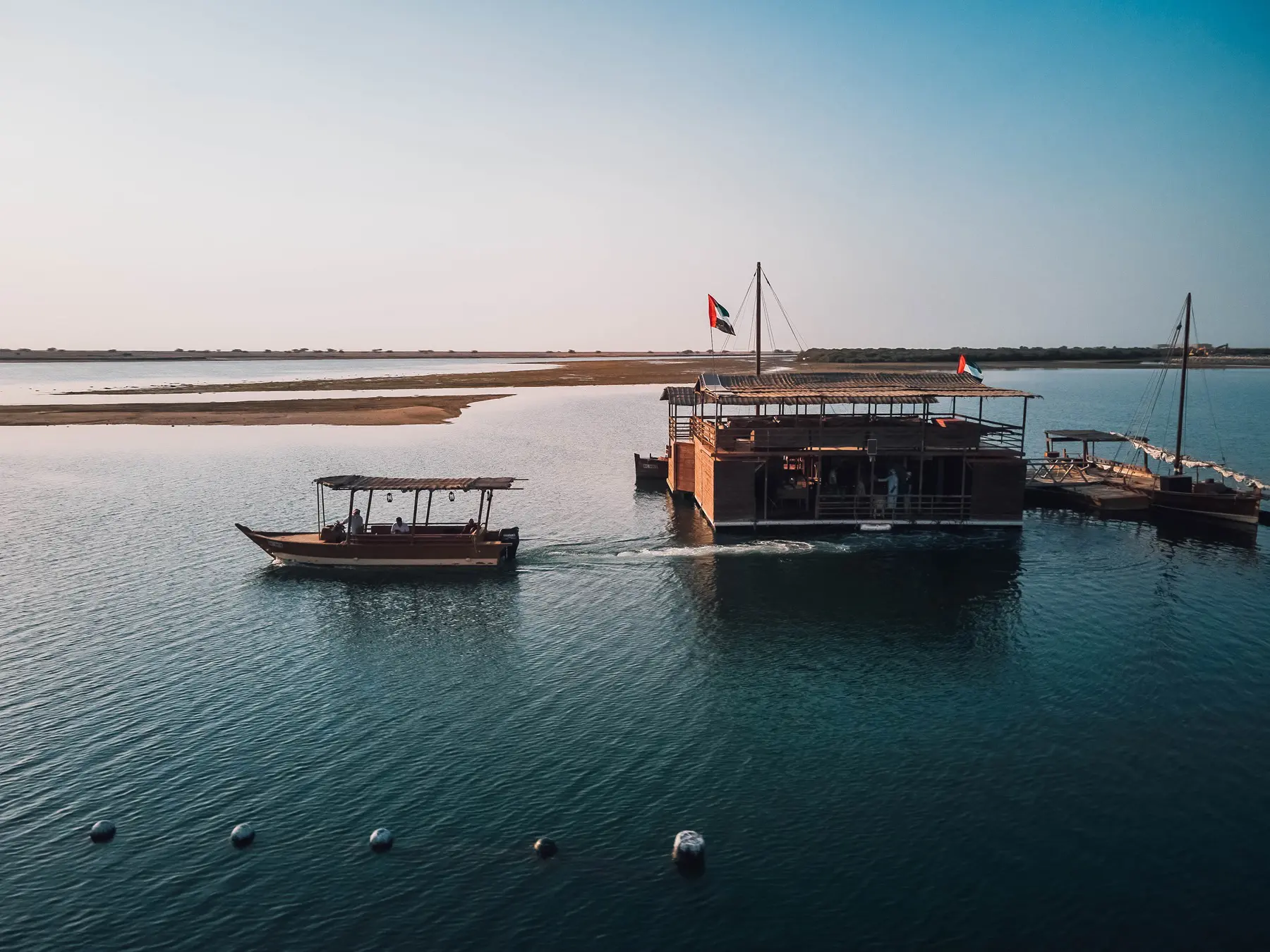
For centuries, the pearl divers of Ras Al Khaimah were regarded as some of the most courageous in the world, diving into the dark depths of the Gulf with nothing but a nose clip and a prayer. To truly understand this, you must visit the Suwaidi Pearls farm in Al Rams. This is the only cultured pearl farm in the region, founded by Abdulla Al Suwaidi, the grandson of one of the last remaining pearl divers in the UAE.
As you board a traditional wooden dhow and drift through the serene mangroves of Al Rams, the modern world feels light-years away. The experience is not just about the science of pearls; it is more of a storytelling . You will learn about the Ghows, the grueling four-month diving season where men lived on cramped boats under the scorching sun. You will see the tools of the trade: the scuttle baskets and the heavy stones used to pull divers to the seabed. The highlight of the morning is the opening of a live oyster. The tension in the air as the knife pries open the shell is real, a reminder of the high-stakes games that once defined the local economy. We've seen people genuinely gasp when the shell opens to nothing. We've also seen someone find a pearl on their first try. Either way, you won't forget the moment
Afternoon: The Ghost Village of Al Jazirah Al Hamra After a traditional seafood lunch by the docks, you will travel south to one of the most mysterious sites in the country: Al Jazirah Al Hamra. This is the last remaining traditional town in the UAE that was not demolished or modernized.
Often referred to by locals as the "Ghost Village," this settlement was abandoned in the mid-20th century during the transition to the modern state. What remains is a sprawling open-air museum of coral-stone houses, mosques, and wind-towers that are slowly being reclaimed by the desert sands.
Wandering through the silent alleyways of Al Jazirah Al Hamra is an eerie, beautiful experience. You will notice the intricate textures of the walls, built from fossilized coral and sea-shells harvested from the nearby coast. This village was once home to the Zaab tribe, a powerful maritime clan, and you can still see the grandeur of the merchant houses with their ornate carvings. There is a specific quietude here that invites reflection. Many locals believe the village is haunted by djinns, but for you, the only spirits present are the memories of a community that once thrived on the edge of the sea.
Evening: Starlit Dinner at Al Wadi Desert To round out the first day, move inland to the terracotta dunes of the Al Wadi Desert. While there are luxury resorts here, the focus for you should be the Bedouin experience. Many resorts offer traditional desert dinners where you sit on low cushions under a canopy of stars. As you eat slow-cooked lamb and sip on sage-infused tea, you are experiencing the desert exactly as the nomadic tribes did for millennia. The transition from the coastal life of the morning to the desert life of the evening shows you both sides of RAK in one day.
Day 2: Fortresses of the Sky and Tribal Resilience
Morning: Dhayah Fort and the Last Stand The second day of your itinerary takes you into the clouds. Dhayah Fort is the only hilltop fort still standing in the UAE and occupies a strategic position overlooking the lush date palm gardens and the Arabian Gulf. The climb is steep, nearly 240 zig-zagging stone steps, but the reward is the most spectacular view in the northern emirates. This fort was the site of a historic battle in 1819 between the local tribes and the British Royal Navy. It represents the fierce independence and resilience of the people of RAK.
Standing atop the fort, you can see the defensive logic of the ancient architects. To your left are the mountains, providing a natural barrier; to your right is the sea, the source of wealth and the direction of threats. The golden stone of the fort seems to glow in the morning sun, and the surrounding date plantations, known as "Oases," provide a cooling green contrast to the arid landscape. Standing up there, you understand exactly why this place was never fully taken.
Afternoon: The National Museum of Ras Al Khaimah Descend from the fort and head into the heart of the old city to visit the National Museum. Housed in a former fort that served as the residence of the ruling Al Qasimi family until the 1960s, the museum is packed with archaeological finds. RAK is unique because it contains four distinct landscapes: the mountains, the desert, the coast, and the oases. The museum is organized to show how the inhabitants of this region adapted to each of these environments.
Pay close attention to the "Quake" era pottery and the ancient tombstones found in the Shimal area. These artifacts prove that RAK was a major player in the "Dilmun" trade network, linking the Indus Valley to Mesopotamia. The museum also features an impressive collection of traditional weaponry, jewelry, and documents that detail the rise of the Al Qasimi maritime empire, which once boasted one of the most powerful naval fleets in the Indian Ocean. This pushes back on the idea that the UAE is a "new" country; rather, it is a very old culture that has recently found new wealth.
Late Afternoon: The Shimal Archaeological Site A short drive from the museum leads you to Shimal, an area nestled at the foot of the Hajar Mountains. This site is home to several hundred pre-Islamic tombs dating back to the Umm Al Nar period. The most famous structure here is the "Husn al-Shimal," a medieval palace believed to be the residence of the ruler of Julfar (the ancient name for RAK). Walking among the ruins of the palace, you can see the foundations of the massive water tanks and storage rooms that allowed the inhabitants to survive mountain sieges. This area was once a bustling urban center long before the modern city was conceived.
Day 3: The Mountain Tribes and the Future of Tradition
Morning: Jebel Jais and the Mountain Life On your final day, you will ascend the Hajar Mountains via the winding roads of Jebel Jais, the highest peak in the UAE. While many come here for the ziplines and sledders, you should focus on the "Shihuh" tribe, the traditional inhabitants of these peaks. For centuries, the mountain people lived in stone houses called "Bayt Al Qufal" (the house of the lock). These houses were designed with thick stone walls to regulate temperature and featured sophisticated locking mechanisms to protect the family’s grain and water during their seasonal migrations to the coast.
As you drive up the mountain, look for the small stone terraces on the slopes. These were ancient mountain farms where the Shihuh grew wheat and kept mountain goats. The ingenuity required to farm on such steep, arid terrain is a testament to the human spirit of the RAK people. At the Jebel Jais Viewing Deck Park, take a moment to look out over the jagged peaks into neighboring Oman. This landscape is the reason why Ras Al Khaimah was never fully conquered by outside powers; the mountains were an impenetrable fortress for the local tribes
Afternoon: The Al Wadi Equestrian Center and Falconry Heritage is not just about buildings; it is about the bond between humans and animals. Return to the Al Wadi area to witness the ancient art of falconry. In the Bedouin tradition, the falcon was not a pet but a vital hunting partner that ensured the family’s survival in the harsh desert. The trainers here use traditional techniques to demonstrate the bird’s incredible speed and precision. Alongside the falcons, you can interact with the Saluki dogs, the desert hounds that have been used for hunting for thousands of years. Understanding these animals is crucial to understanding the Bedouin psyche: a deep respect for nature and a focus on survival and partnership.
Evening: The Old Souk and the Corniche Your heritage journey concludes where it began, near the water. The Old Souk of Ras Al Khaimah is far less commercial than those in Dubai. Here, you can still find vendors selling traditional "Karak" tea, hand-woven palm mats, and the local "Sidr" honey, which is harvested from the mountains and is world-renowned for its medicinal properties. Walk along the Al Qasimi Corniche as the sun sets. You will see local families gathering for picnics, the same way they have for generations, even as the skyline around them begins to change.
The Logistics of a Heritage Journey in RAK
Planning a deep-dive heritage trip in Ras Al Khaimah requires a different approach than a standard beach holiday. Because many of these sites are tucked away in mountains or desert enclaves, the planning is important if you want things to run smoothly
Transportation: While taxis are available, Rent a 4x4 - you genuinely need one. Some of the mountain roads and desert approaches are better navigated with a sturdy vehicle, especially if you plan to explore the Shimal tombs or the deeper parts of Al Wadi.
Timing: RAK is significantly hotter than the coast during the summer, but the mountains can be quite chilly in the winter. The best time for this heritage itinerary is between October and April. If you visit in the summer, get to the outdoor sites like Dhayah Fort or Al Jazirah Al Hamra by 7:00 AM to avoid the midday sun.
Respectful Exploration: When visiting the ghost village of Al Jazirah Al Hamra, remember that although it appears abandoned, it is a site of great cultural significance. Do not remove stones or artifacts from the ruins. Similarly, when climbing to Dhayah Fort, bring more water than you think you need and wear sturdy hiking shoes.
Guided Tours: For sites like Suwaidi Pearls, booking in advance is mandatory. For the National Museum, consider hiring a local guide who can explain the tribal lineages and the specific uses of the ancient tools on display.
The drive back to Dubai takes about 90 minutes. It'll feel longer - in a good way.
Which part of RAK’s history fascinates you the most? Is it the mysterious ghost village or the ancient pearl diving trade? Let us know in the comments !