
I arrived at Dhayah Fort in the late afternoon, when the limestone peaks of Jebel Jais were catching the last direct light. The silence up there is specific - not empty, but weighted. You can smell the date palm oases below before you can see them. It's the kind of place that makes you want to slow down, which is exactly what it was designed to make invaders not do.
Dhayah Fort is much more than a scenic lookout. It remains the only hilltop fort still standing in the United Arab Emirates.It stands over the lush plains of Al Rams and the Arabian Gulf. History enthusiasts and photographers will find a visceral connection here to the resilient Al Qasimi tribe and gives you a direct window into the colonial history of the lower Gulf.
A Journey Back in Time: The Strategic History of Dhayah Fort
To appreciate the view, you must first understand what the tribe defended from these heights. The current structure dates to the 19th century. However, it sits on the foundations of much older fortifications. These older walls guarded the valley for millennia. Historically, this region was a vital strategic prize. fertile land combined with direct access to deep-water sea lanes and immediate proximity to deep-water sea lanes.
In December 1819, Dhayah Fort became the stage for a pivotal moment. It served as the very last stronghold to fall during the Persian Gulf campaign. British naval and ground forces launched this massive expedition against the Al Qasimi fleet. The British dismantled the primary coastal defenses in Ras Al Khaimah city first. Afterward, the local defenders retreated to this hilltop peak. They believed the steep, rocky terrain would protect them from superior firepower.
The resulting siege was incredibly intense. I imagined the defenders looking out from these ramparts. They watched British soldiers struggle to move heavy iron cannons through the muddy marshes below. Eventually, the British brought their artillery within range. Today, the Ras Al Khaimah Department of Antiquities and Museums maintains the restored fort. It now stands as a monument to that resistance. You can explore the archaeological significance further at the RAK Heritage official portal.
The Architectural Marvel of the Al Qasimi Era
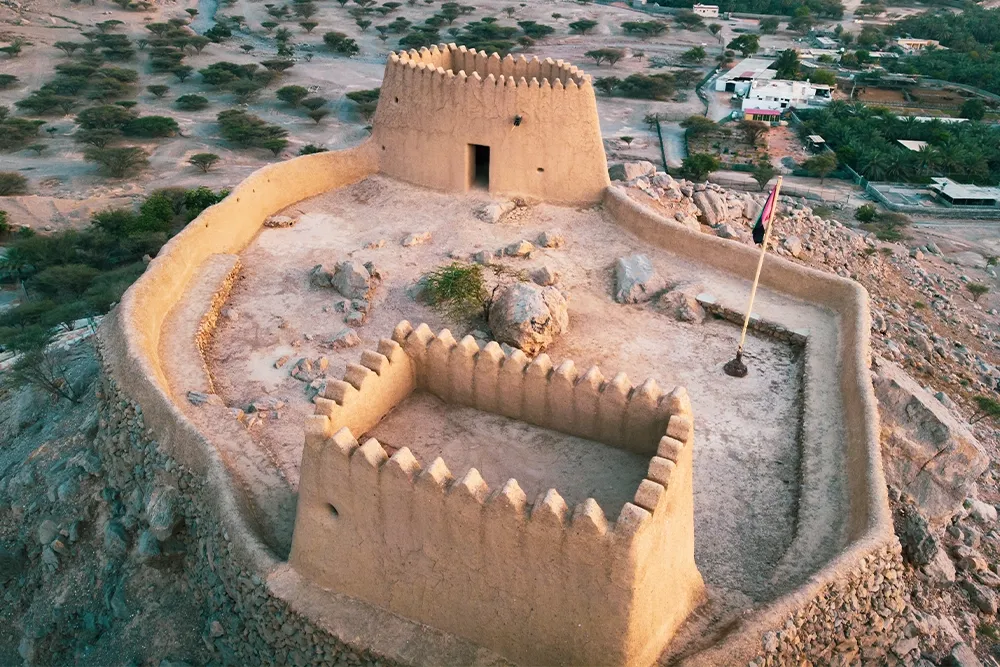
The architecture of Dhayah Fort shows incredible regional adaptation. Unlike decorative European palaces, this fort had one purpose: survival. Workers constructed the walls from a blend of sun-dried mud, local coral, and jagged limestone blocks. They hauled these materials up the hillside by hand. This combination was remarkably effective. It absorbed the heat of the Arabian sun while providing a sturdy defense.
As you walk through the two main towers, you will notice the rooms are compact. These spaces were never meant for luxury. Instead, they housed soldiers standing watch during blistering days and chilling nights. The narrow slits in the walls are known as crenels. They allowed defenders to fire upon attackers while remaining shielded. Those same narrow windows now frame the emerald mangroves on the horizon.
The Ascent: 239 Steps to the Clouds
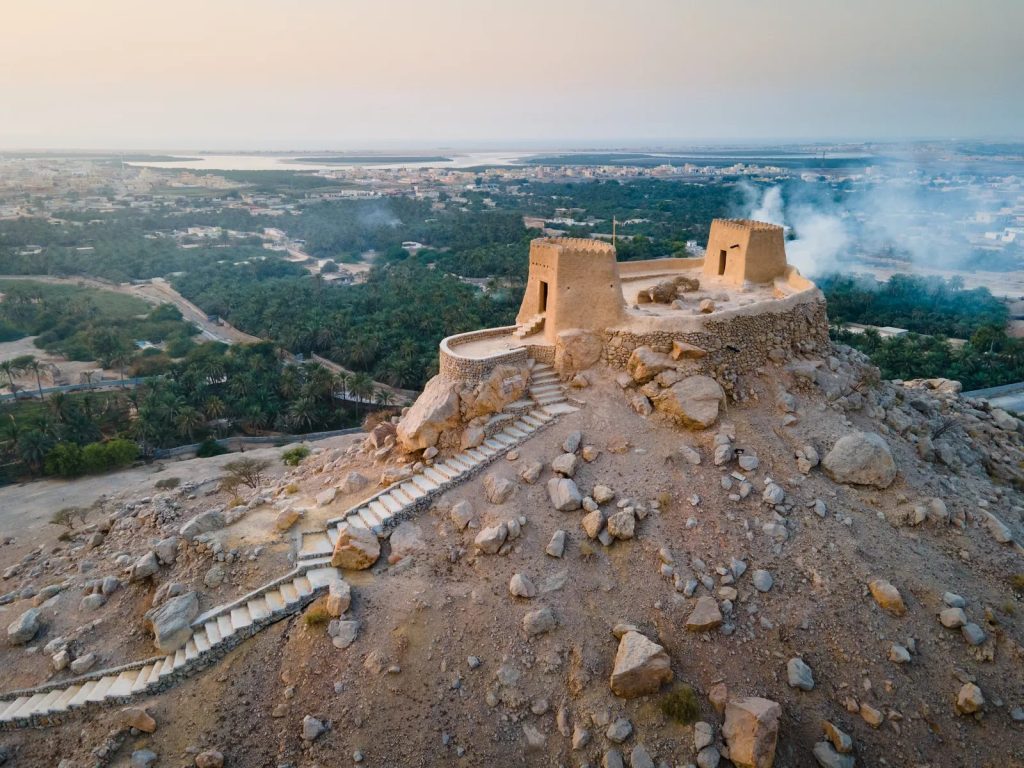
Travel brochures often describe the climb to the top as strenuous. While it requires physical effort, I found the ascent to be a meditative ritual. Exactly 239 steps wind up the hill in a rhythmic pattern. By taking your time, you can truly absorb the changing environment:
- The Lower Third: You are still surrounded by the sounds of Al Rams village. You will likely hear goats bleating and the rhythmic rustle of palm fronds, known as Awan.
- The Midpoint: The air begins to cool noticeably as the sea breeze catches the cliffside. Here, the scale of the fortification hits you. You can see the ancient dry-stone walls that once stabilized the hillside.
- The Summit: As you crest the last step, the world opens in a 360-degree panorama. To your left, the mountains rise like a wall. To your right, the ocean stretches toward the sunset.
The Ultimate Sunset Experience in Dhayah Fort
If you arrive at 2:00 PM, you see an impressive historical site. However, if you arrive at 5:30 PM, you witness a masterpiece. As the sun descends, the color palette shifts. The dusty beige desert transforms into deep ochre and shimmering gold.
To the East, the Hajar Mountains cast long shadows over the wadis. These shadows grow longer by the minute. They eventually swallow the modern villas at the base of the hills. Meanwhile, to the West, the sun dips behind coastal clouds. This view silhouettes distant cargo ships and traditional wooden fishing dhows. It's the best moment for photography.
I sat on the northern rampart for an hour. I watched the lights of the modern city flicker to life. It is a rare place where you can see the UAE’s past and future side-by-side. You feel the ancient stone beneath your feet while observing gleaming highways below.
Exploring the Al Rams Community
Do not rush back to your hotel after your descent. The village of Al Rams sits at the foot of the hill. It is one of the most authentic fishing communities in the Emirates. People have lived here for thousands of years. These residents maintain a deep, spiritual connection to the sea.
You might see local fishermen mending their nets. Others prepare their traditional traps, known as Gargoor. The proximity of the fort to the village is a reminder. These structures were not just military outposts. They were the guardians of a specific way of life. The date palm groves surrounding the base are still active today. These oases provide a cooling microclimate. The ancient irrigation channels, or Aflaj, prove the engineering skills of the local people.

Planning Your Visit: Essential Tips
Dhayah Fort is about 20 kilometers north of Ras Al Khaimah city center. The site rarely feels crowded because the vertical layout spreads visitors out. Use the table below to plan your trip:
| Category | Advice |
| Best Season | Visit between November and March to avoid heat. |
| Best Timing | Arrive one hour before sunset for the best light. |
| Footwear | Wear sturdy sneakers; the stairs can be slippery. |
| Water | Bring your own bottle; there are no vendors at the top. |
| Equipment | Bring binoculars to spot birdlife in the mangroves. |
Why Dhayah Fort Matters Today
In a country famous for skyscrapers, Dhayah Fort provides a necessary grounding. It reminds us that Emirati history is rooted in the soil and the rugged mountains. The site is currently on the UNESCO World Heritage Tentative List. It is a cultural landscape. This means it shows how humans adapted to this arid environment for millennia. You can find more details on the UNESCO World Heritage Centre website. By visiting, you support the preservation of a global treasure.
As I walked down the stairs in the twilight, I felt the continuity of the land. The palm groves are still harvested today. The call to prayer from the mosque is the same sound soldiers heard two centuries ago. Dhayah Fort is worth the drive from Dubai, two hours each way - if you time it right. Go for sunset, take the full hour at the top, and walk through Al Rams on your way back. The kayaking through the mangroves is a good add-on if you have the time. Drop any questions in the comments.
Local Wildlife and the Mangrove Ecosystem
While the fort is the main attraction, the surrounding ecosystem is equally vital. The Al Rams mangroves sit just a few hundred meters from the base of the hill. These salt-tolerant trees act as a nursery for local fish species. If you look closely from the fort's ramparts, you can spot various birds. Greater Flamingos often visit these shallow waters during the winter months.
The mangroves also protect the coastline from erosion. This natural barrier has served the Al Rams community for generations. Visitors should consider taking a kayaking tour through these waters after visiting the fort. It offers a different perspective on the Golden Bastion. You see the fort as the ancient defenders saw it, a protective crown sitting high above the life-giving water.