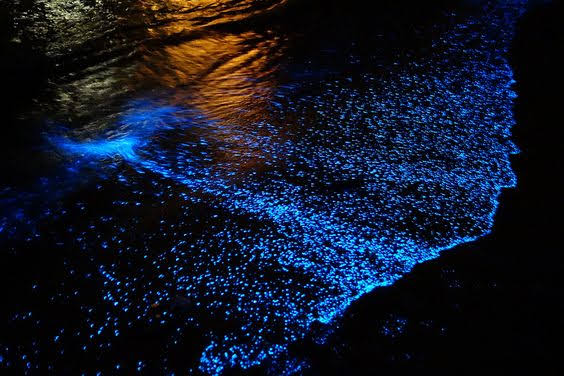
On the right night, the sea in the UAE glows. Every wave that breaks leaves a streak of electric blue, and every footstep in the wet sand sets off a scatter of sparks. Bioluminescence in the UAE is real, it is free, and it is one of the few experiences here that no ticket can guarantee.
The glow shows up on its own schedule, so this guide covers what you can control: where sightings are reported, when your odds are best, and how to give yourself a fair chance of seeing it.
What is bioluminescence, and why does the sea glow?
The blue light comes from plankton called dinoflagellates, commonly known as sea sparkle. When the water around them is disturbed by a wave, a paddle or your hand, a chemical reaction inside each cell gives off a brief flash. The light works as a defence against predators.
One cell is invisible. Millions of them in a calm, dark bay light up the whole shoreline. The light is weak and may only be visible in dark surroundings, which is why streetlights and a bright moon wash it out completely.
Where to see bioluminescence in the UAE
There is no single "glowing beach". Sightings move from night to night, so treat these as the places where your odds are best.
Dibba and the Fujairah coast
The east coast is the most consistently reported area. The beaches are darker and there is far less development along the shore. Dibba has had documented sightings of bioluminescent plankton along the beach, with hundreds of glowing blue specks lining the shore. From Dubai it is roughly a 1.5 to 2 hour drive, so plan a late evening or an overnight stay.
Khorfakkan
Khorfakkan Beach has been named in reports of glowing shores. The main beach is well lit, which works against you. Walk to the far ends of the bay or try the smaller coves nearby.
Umm Al Quwain
The closest realistic option to Dubai, at around an hour's drive. Umm Al Quwain has also been named among the beaches that lit up. Check the news for any beach closures or water quality notices before you go.
Ras Al Khaimah
Less documented in the press than the east coast, but the long, dark stretches of northern coastline make it worth a look if you are already staying there. Head away from the resort strips.
Dubai and Abu Dhabi
It does happen. Sunset Beach in Jumeirah has been reported glowing, and sightings have come from the Abu Dhabi coast as well. City light makes it much harder to see, so treat a Dubai sighting as a lucky bonus.
| Area | Drive from Dubai | Darkness | Best for |
|---|---|---|---|
| Dibba, Fujairah | About 1.5 to 2 hours | Very good | The strongest odds |
| Khorfakkan | About 1.5 hours | Good away from the main beach | Combining with a day trip |
| Umm Al Quwain | About 1 hour | Good | A quick evening attempt |
| Ras Al Khaimah | About 1 to 1.5 hours | Good on the northern coast | If you are staying nearby |
| Jumeirah, Dubai | In the city | Poor | A lucky bonus |
When is the best time to see it?
The phenomenon sometimes occurs between June and October because of plankton blooms, though it isn't always visible. The plankton themselves are present in Gulf waters throughout the year, so sightings do happen outside that window.
What matters more than the month is the night itself:
- Moon: go around the new moon, or after the moon has set.
- Sea: calm nights are best. Rough water scatters the plankton.
- Time: go properly late, at least two hours after sunset.
- Recent reports: check Instagram and local news for sightings from the last day or two.
Tips for the best chance of seeing the glow
- Get away from light. One floodlit car park is enough to ruin it. Walk until the beach is dark.
- Let your eyes adjust. Give it 15 to 20 minutes without looking at your phone.
- Move the water. The plankton only flash when disturbed. Drag your hand through the shallows or watch where waves break.
- Be patient. If you see nothing in the first ten minutes, walk further along. The glow is often patchy.
- Photograph it properly. Use night mode or a long exposure, rest the phone on something solid, and turn the flash off.
- Leave the beach clean. Take everything back with you.
Is it safe to touch or swim in?
Experts quoted in local coverage have confirmed the glowing plankton are harmless. Use common sense, though. Some algal blooms in the region are harmful, and authorities have issued swimming and fishing warnings during red tide events. If the water looked red or brown during the day, smells bad, or there are dead fish on the shore, stay on the sand. Night swimming is also only allowed on certain beaches, so check local rules first.
Frequently asked questions
Is bioluminescence guaranteed in the UAE?
No. It depends on plankton density, currents, the moon and how dark the beach is.
Which is the best beach for bioluminescence in the UAE?
The Fujairah coast around Dibba has the best mix of dark beaches and reported sightings. Umm Al Quwain is the nearest good option to Dubai.
Can you see bioluminescence in Dubai?
Occasionally, but light pollution makes it faint. Your odds improve sharply once you leave the city.
Do I need a tour?
No. Any dark public beach works. Night kayaking on the east coast can be a good way to see it, since every paddle stroke lights up the water.
Is there anywhere nearby with stronger displays?
Sur in Oman has been seeing it more commonly, and some UAE residents drive there for it.
Make a night of it
Bioluminescence rewards patience over planning. Pick a dark beach, go on a moonless night, give your eyes time, and stir the water. If the sea stays black, you have still had a quiet night on the coast under more stars than you will see in the city.
If you are visiting, an east coast night pairs well with a day in Fujairah or Khorfakkan. Slot it into our Dubai 3-day itinerary as an extra evening, or browse all Dubai itineraries by trip length.
Have you seen the sea glow in the UAE? Tell us where and when in the comments.