

If you are currently building your first Dubai itinerary, your social media feed is likely already saturated with images of gold-leaf steaks, underwater dining rooms, and high-altitude afternoon teas. While these experiences are part of the city's modern identity, the true culinary heart of Dubai isn't found in a glossy brochure or a sponsored post. Instead, it is found in the aromatic steam of a Satwa cafeteria at midnight, the clinking of tiny ceramic cups in a heritage house in Al Fahidi, or the rhythmic sound of a baker slapping dough against the side of a tandoor oven in Deira.
Eating in Dubai is a sophisticated cultural dance. It is a world governed by unspoken rules, centuries of maritime trade history, and a unique modern car culture that has adapted to the desert climate. This guide is designed to transform you from a curious tourist into a seasoned resident, helping you navigate everything from the nuances of street-side etiquette to the logistical complexities of the city's legendary brunch scene.
The Phenomenon of the "Car Honk" Dining Culture
In many Western cities, the concept of a "drive-thru" is limited to a plastic window, a static menu board, and a muffled headset. In Dubai, particularly in the older, soul-filled neighborhoods like Jumeirah, Al Wasl, and Satwa, the drive-thru is the entire street. This is a fascinating byproduct of the city's extreme summer heat and its deep-rooted car culture. It is one of the few places on earth where you will see a million-dollar Italian supercar and a battered delivery motorbike parked side-by-side in front of a humble, neon-lit cafeteria.
The process is an art form that requires a specific set of social cues. You pull up to the curb—taking care never to block the flow of traffic—and give a short, polite honk of your horn. Within seconds, a server in a colorful uniform will emerge, weaving effortlessly through the parked cars to reach your window with a laminated menu. This is the kingdom of the "Hassan Mathar," a spicy, cheesy chicken wrap that has fueled generations of Dubai residents, from construction workers to CEOs. Ordering your 1-Dirham Karak tea this way isn't just about the convenience of air conditioning; it is a quintessential Dubai experience that connects you to the city’s fast-paced, street-level energy. It is a moment of shared humanity where the barriers of the vehicle disappear in exchange for a steaming cup of tea and a quick exchange of "Mafi Mushkil" (no problem).

Decoding the Local Dough: A Journey Through Flour and Fire
Bread is the heartbeat of every Middle Eastern meal, yet calling it all "pita" is a common traveler's mistake that overlooks the incredible diversity of the region's baking traditions. In Dubai, the type of bread placed on your table tells a story of migration, trade, and local adaptation. The most ubiquitous is Khubz, the classic, pillowy flatbread that arrives at your table puffed up like a balloon. The golden rule of the Dubai table is to use your right hand; bread is your primary utensil, designed to be torn into small pieces and used to "scoop" up hummus, moutabal, or grilled meats. To use a fork for these dips is often seen as a missed opportunity to engage with the textures and temperatures of the food as the chef intended.
However, to truly eat like an Emirati, you must seek out Regag. Unlike the soft, doughy Khubz, Regag is paper-thin and impossibly crispy. It is prepared on a large, flat metal griddle where the baker spreads a thin film of fermented dough with a practiced flick of the wrist. It is the Emirati answer to the savory crepe, traditionally smeared with "mheyawa"—a potent, umami-rich sauce made from fermented anchovies, herbs, and spices. It is often topped with a cracked egg and a layer of salty cream cheese, creating a breakfast dish that is simultaneously crunchy, creamy, and salty.
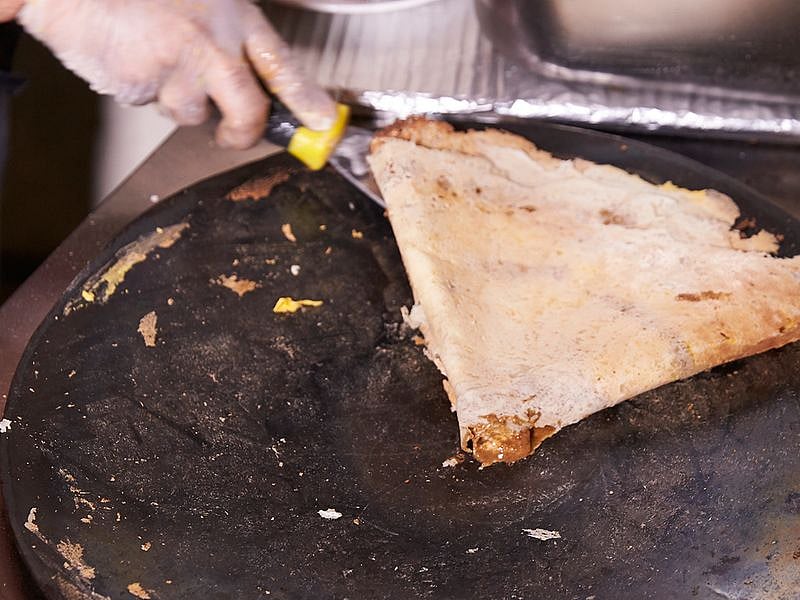
Finally, there is the Paratha (or Porotta). This flaky, oily, multi-layered bread is a testament to the massive influence of the Indian subcontinent on Dubai’s palate. It arrived with the merchant and labor classes decades ago and has since been fully integrated into the local diet. It is the heavy hitter of the cafeteria world, usually used to wrap up spicy omelets, fried chicken, or even Kraft cheese and honey. The Paratha represents the fusion soul of Dubai—a dish that originated elsewhere but found its most iconic "cafeteria" form in the streets of the UAE.
The Sacred Ritual of Gahwa: Hospitality in a Cup
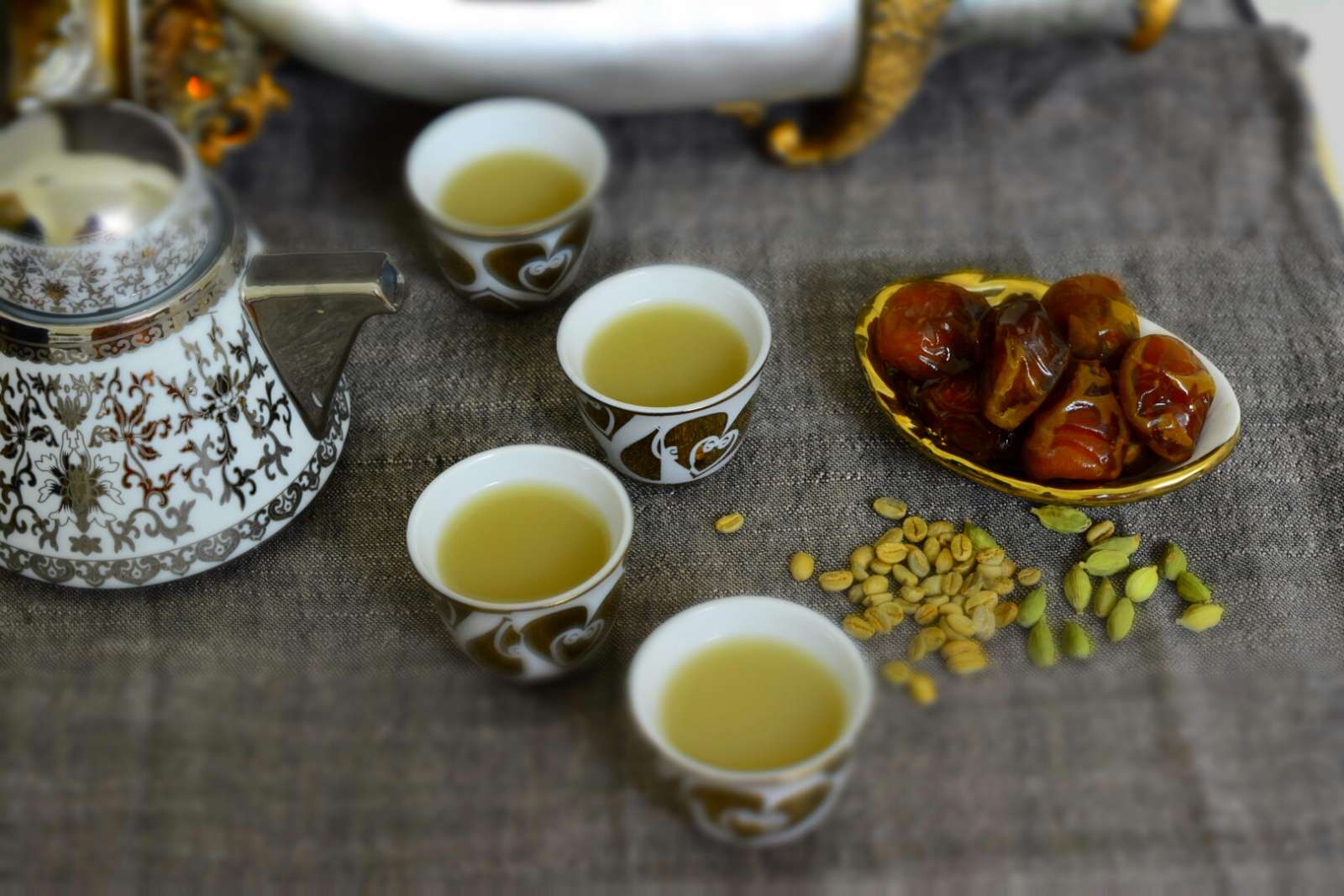
When you step into a hotel lobby, a traditional majlis, or an Emirati home, the first sensory experience you will encounter is the intoxicating scent of Gahwa. This Arabic coffee is a world away from the dark, syrupy espresso found in the cafes of Europe. It is a light, golden-hued liquid, brewed with lightly roasted green coffee beans and a heavy hand of crushed cardamom, cloves, and occasionally saffron.
The etiquette of Gahwa is steeped in Bedouin hospitality, where the welcoming of a stranger was a matter of honor and survival. Your server will approach you holding the tall, curved, golden "Dallah" (coffee pot) in their left hand, offering you a tiny, handle-less ceramic cup called a "Finjan" with their right. You must always accept the cup with your right hand. Because the coffee is bitter, acidic, and served piping hot, it is traditionally paired with the world’s finest dates.
Look for the "Khalas" variety for a butterscotch flavor, or the "Medjool" for a rich, meaty sweetness.
The most important part of the ritual is knowing how to stop. If you have finished and don't want a refill, simply saying "no thank you" can sometimes be ignored by an over-eager host. Instead, give your cup a small, quick jiggle or shake from side to side before handing it back to the server. This subtle, silent gesture is the universal signal across the Arabian Peninsula that your soul is satisfied and your cup is full.
Navigating the Saturday Brunch: The City's Social Marathon
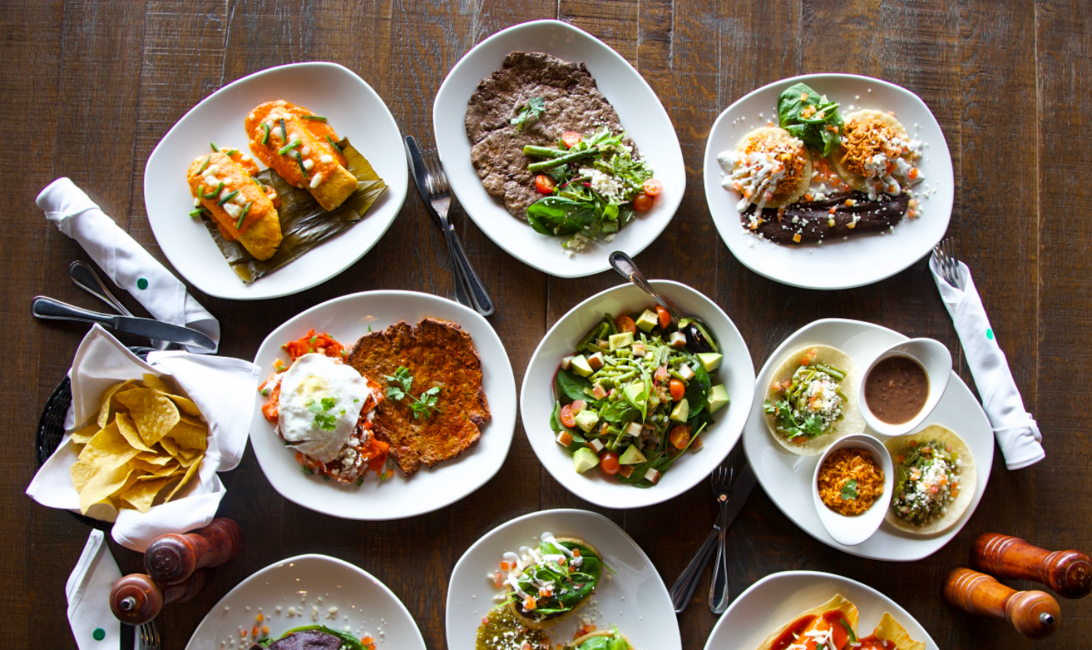
You cannot authentically discuss the Dubai food scene without addressing the "Saturday Brunch." In this city, brunch is not merely a late breakfast; it is a weekly social phenomenon that dictates the entire rhythm of the weekend. Spanning a strictly enforced window, usually from 1:00 PM to 4:00 PM, these are all-inclusive feasts where the city’s most prestigious kitchens showcase their entire repertoire in a display of culinary abundance that borders on the theatrical.
However, not all brunches are created equal. To survive the Dubai brunch scene, you must identify which "Brunch Identity" suits your mood. The Party Brunch is a high-octane affair characterized by live DJs, confetti cannons, and a crowd that treats the afternoon like a nightclub opening. The Family Brunch is a more relaxed, communal experience often held in sprawling outdoor gardens or poolside, featuring massive play areas and buffet stations designed specifically for children. Finally, the Fine Dining Brunch (or "A La Carte Brunch") offers a more sophisticated experience where the food remains the primary star, served in small, curated courses to your table rather than via a buffet.
Regardless of your choice, the "Survival Tip" for brunch is twofold: Pace yourself and respect the dress code. Dubai is a city that delights in fashion, and "Smart Casual" at a brunch in the Dubai International Financial Centre (DIFC) often translates to designer suits and high-end evening wear. Also, remember that Sunday is now a working day for many in the UAE, so the Saturday brunch has become the ultimate "last hurrah" of the weekend.
Understanding the Spice Scale and the Pricing Paradox
One of the most frequent shocks for newcomers to the Dubai food scene is the "Hidden Spice Level." Because the city’s culinary foundation is built on the contributions of Indian, Pakistani, and Iranian communities, a "medium" spice rating in a Deira curry house or a Satwa kebab shop is often significantly hotter than "extra hot" in Western Europe or North America. To navigate this without ending your night in tears, always ensure you have a side of Raita (a cooling yogurt with cucumber and mint) or a bowl of Labneh (thick, strained yogurt). The fats in the dairy are the only thing that will effectively neutralize the capsaicin on your tongue.
Furthermore, your Dubai itinerary must embrace the city’s extreme "Pricing Paradox." Dubai offers a unique verticality in its dining costs. You can spend an entire evening in Old Dubai, wandering through the spice souks and sitting on plastic stools in Bur Dubai, and eat a world-class meal of grilled lamb, fresh hummus, and hot bread for less than 30 AED ($8.00). Conversely, a high-end dinner at the Palm Jumeirah or within the shadows of the Burj Khalifa can easily exceed 600 AED ($160) per person without including beverages. A truly successful foodie journey in Dubai involves leaning into both extremes, spending one night under the neon glare of a skyscraper and the next in a bustling, historic alleyway where the recipes haven't changed in forty years.
The Essential Foodie Lexicon
To truly blend in and show respect for the local culture, move beyond the word "check" and integrate these local terms into your vocabulary:
Karak: Derived from the Hindi word 'Kadak' (strong), this is the unofficial national drink of the UAE. It is a potent, sweet, tea-dust brew simmered with evaporated milk and spices like cardamom and ginger.
Toum: The fluffy, white, incredibly potent garlic paste that accompanies charcoal-grilled chicken. It is non-negotiable for a proper Dubai meal.
Zatar: A savory, earthy herb blend consisting of dried thyme, sumac, and toasted sesame seeds. It is the primary seasoning for morning breads and labneh.
Bill: In Dubai, we don't ask for the "check." We ask for the "bill, please." It is the standard British-influenced term used across all levels of dining.
Mafi Mushkil: This literally translates to "no problem." You will hear it constantly from servers and shopkeepers. It reflects the easy-going, hospitable spirit that underlies the city’s service industry.
Habibi / Habibti: Terms of endearment meaning "my dear" (male/female). While you might not use it yourself, hearing a waiter call you "Habibi" is a sign you've transitioned from a customer to a guest.
Final Thoughts for the Hungry Traveler
As you finalize your Dubai itinerary, remember that the best meals often require a bit of walking and a willingness to step outside your comfort zone. Don't be afraid of the small, "no-name" cafeterias with plastic chairs; if you see a crowd of locals and expats huddled around a small window at 11:00 PM, you have likely found something special. By understanding these cultural nuances and the history behind the plate, you aren't just eating your way through a city; you are participating in a living tradition of hospitality that has defined the Arabian Peninsula for centuries. Happy dining!
